
REFLEXOLOGY AND HEAD MASSAGE IN CHESTERFIELD, DERBYSHIRE
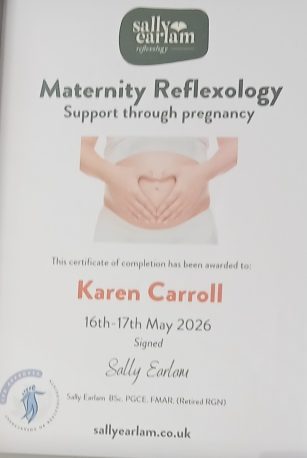
Maternity & Reflexology

Reflexology in pregnancy, and beyond, aims to optimise the physical and emotional health of the pregnant woman and therapists are also able to provide general lifestyle advice and offer support.
One benefit of receiving reflexology during pregnancy is that it allows time away from often busy lives and provides a time and space where you can focus purely on yourself and your growing baby - this should not be underestimated. It is so important that you have time to be able to clear your mind and to think through and talk about how you are feeling about the arrival of a new baby into your life.


What happens to our bodies during pregnancy?
Pregnancy asks a lot of the body - physically, hormonally, and emotionally. And while no single therapy is a magic fix, reflexology is increasingly explored as a gentle, supportive option during this time. Research suggests that reflexology may help reduce stress, promote relaxation, and support overall wellbeing during pregnancy. Some studies have also observed improvements in sleep quality and reductions in perceived discomfort, particularly in areas like lower back tension, swelling in the legs, and general fatigue.
The 1st trimester especially is a time when there are huge hormonal changes, as well as anxiety and worries about what is going to happen. Both of these things can leave you feeling delighted, afraid, worried, exhilarated - all at the same time! I aim to aid your relaxation, de-stress and offer support.
In the 2nd and 3rd trimester, most of the discomforts of early pregnancy will have gone. However, as the baby grows and your pregnancy develops, you may begin to experience other physical symptoms. Your stress and anxiety levels may also rise as the birth becomes more imminent.
Reflexology can be used for general well-being or to address other health issues such as sleeping problems as they arise. What’s important to understand is how it works in this context: reflexology doesn’t “treat” pregnancy symptoms directly. Instead, it focuses on stimulating specific reflex points on the feet that correspond with different systems of the body, encouraging balance, circulation, and relaxation. And during pregnancy, that matters more than ever. The nervous system is already under pressure, sleep can be disrupted, and the body is constantly adapting. Creating space for deep rest is one of the most impactful forms of supportive care.
What to expect from a reflexology treatment during pregnancy
Your comfort is one of my primary concerns.
You will always be offered additional pillows and cushioning to ensure you are in the most comfortable position possible; you should also let me know if you start to feel breathless or nauseous, so I can move you into a better position.
During the 3rd trimester I will accommodate you lying more on your left side with your pelvis tilted slightly. This ensures there is no or minimal compression on any veins.
You may feel a little lightheaded afterwards - I will always ensure you take time to sit up and stand up and give you water to drink - I'll support you all the way.
Are there any risks in having reflexology treatment during pregnancy?
Your safety is also one of my primary concerns.
I don't need to see your maternity notes but I will take a slightly more detailed consultation with you, even if you've been a client of mine for a while. This is to ensure full safety for you and your baby.
Whilst there are risks throughout pregnancy, there is a higher likelihood of miscarriage in the first 13 weeks of pregnancy. So there is statistically a greater chance that you may miscarry in the first trimester than later on in the pregnancy. The benefit of the relaxation offered by reflexology is immensely valuable during a time when anxiety can be high and unfortunately some pregnancies are just not meant to be.
However, there is no evidence to suggest that reflexology can cause a miscarriage.
If there are any reflexology contra-indications I may not be able to treat you, for example there is a higher risk of DVT in pregnancy. Also if you have any vaginal bleeding or sudden onset of pain - you need to seek medical help. Severe headache, visual disturbance, indigestion like pain, very swollen feet, ankles or face or you just feel very unwell - you need to seek medical help as this may be a sign of pre-eclampsia.
The aim of the treatment is relaxation and to ease any symptoms or anxieties. Many women report improvements in common conditions such as constipation, heartburn, back ache, mood swings, sleep deprivation, fatigue etc.
Can reflexology induce labour?
Inducing labour is a medical procedure usually carried out in hospital.
There are reflexology techniques that help prepare the body for birth or priming for birth, and these techniques are only used after 37 weeks which is considered normal gestation. Whilst the premise is that reflexology will not bring on premature labour, there is no justification for using these techniques before this time, as these help support and prepare both the body and mind for birth once the pregnancy is considered full term. Even encouraging relaxation at this time, when most women are anxious about giving birth, can often be enough for labour to start - the body will know when it is safe and time to go into labour.
Reflexology for Post Natal women
Reflexology and Head Massage for postnatal women are gentle and natural ways to help with recovery and emotional balance.
They can be particularly beneficial for:
- Pain Relief: easing common aches and pains after childbirth, including back and pelvic discomfort.
- Hormonal Balance: helping the body restore its natural balance, making you feel more like yourself.
- Stress Relief: calming the mind and reducing anxiety, providing a moment to breathe and relax.
- Better Sleep: promoting deeper, more restful sleep, helping you feel more refreshed.
- Emotional Support: lifting the mood and giving a sense of emotional balance.
Working on reflexology points can help you feel relaxed, relieve pain, and restore your energy. Many new mothers feel calm, clear, and more grounded after just one session.
During those early few weeks when you don't necessarily want to leave baby behind, you are welcome to bring him or her with you - try to ensure if at all possible they have had a feed beforehand, so any potential disruption to your relaxation is minimal. You can have them on your chest or tummy, or in the crook of your arm, during the treatment if you like. As you relax, so will baby - the baby will usually calm and sleep soundly throughout the treatment.
Get in touch
Feel free to contact me if you have any questions about how therapy works, or to arrange an initial assessment appointment. This enables us to discuss the reasons you are thinking of coming to therapy, whether it could be helpful for you and whether I am the right therapist to help.
You can also call me if you would prefer to leave a message or speak to me first. I am happy to discuss any queries or questions you may have prior to arranging an initial appointment.
All enquiries are usually answered within 24 hours, and all contact is strictly confidential and uses secure phone and email services.